Beyond the Director’s Chair: The Lesser‑Known Sides of Farhan Akhtar
More Than Just a Filmmaker
For many audiences, Farhan Akhtar is forever linked to Dil Chahta Hai a film that reshaped urban Hindi cinema and redefined how a generation saw friendship, ambition, and adulthood. But reducing Farhan Akhtar to just his work as a director misses the larger story. Over the years, he has quietly built a multi‑dimensional creative life that stretches across music, performance, writing, and activism.
The real question isn’t what Farhan Akhtar does it’s how he continues to shift identities without losing credibility in any of them.
What People Assume vs Ground Reality
The common assumption is that Farhan Akhtar’s success is rooted mainly in his early filmmaking breakthroughs. That his later pursuits especially music are side projects enabled by privilege. The ground reality is more complex.
Farhan didn’t treat music as a vanity experiment. He committed to it publicly, toured extensively, and accepted criticism head‑on. Unlike many actors who dabble in singing briefly, he chose to stay, evolve, and be judged as a performer rather than protected as a star.
His journey shows that creative legitimacy isn’t inherited it’s earned through consistency.
Music, Voice, and Personal Expression
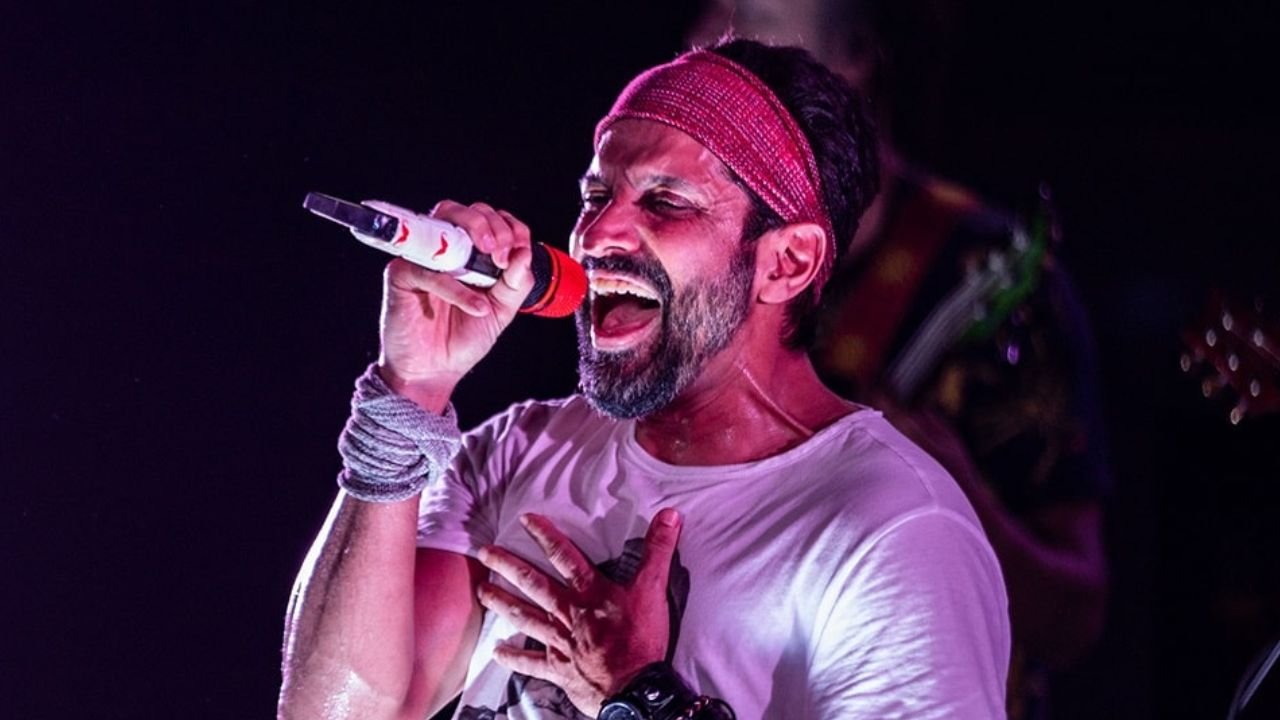
Farhan Akhtar’s relationship with music is deeply personal. As the frontman of his band, he brought a raw, conversational vocal style that contrasted sharply with polished playback singing. It wasn’t about technical perfection it was about honesty.
His songs often deal with self‑reflection, resilience, and social awareness. On stage, his performances feel less like spectacle and more like shared experience. This is where his storytelling instincts as a filmmaker translate naturally into music using rhythm and lyrics instead of frames.
Music became another language for the same impulse: expression without filters.
Culture, Credibility, and Creative Risk
Culture:
Farhan Akhtar represents a generation of Indian artists who refuse to be boxed into one role. His career mirrors a cultural shift where audiences are more open to hybrid identities actor‑musicians, writer‑performers, creator‑activists.
Credibility:
Crossing industries usually comes with scepticism. Farhan’s willingness to face mixed reactions, rather than retreat, helped normalise the idea that artists can grow in public without instant mastery.
Ecosystem:
His journey encourages younger creators to explore multiple creative paths without waiting for permission. It expands the definition of what a “serious” artist can look like in India.
Longevity Over Labels
Farhan Akhtar’s career suggests that longevity comes from evolution, not repetition. Whether through films, music, or public engagement, he continues to operate on his own terms sometimes ahead of acceptance, sometimes against expectation.
Rather than chasing dominance in one space, he seems invested in relevance across many. That adaptability may be his most underrated skill.
Join the Conversation
Farhan Akhtar has moved fluidly between filmmaking, music, and performance without fully belonging to just one label.
Do you think Indian audiences are ready to embrace artists with multiple creative identities or do we still expect them to “pick a lane”?
Share your thoughts in the comments.
Read More About: Shruti Pathak on How Bollywood Music Is Changing: From Fixed Voices to the Age of AI
Leave a Comment