Sara Landry’s India Debut: When Techno Turned Darker, Louder and More Intentional

India’s electronic music audience has been steadily evolving, moving beyond spectacle toward sound that demands attention rather than distraction. Into this moment stepped Sara Landry, whose India debut didn’t arrive as a trend‑driven appearance, but as a statement of intent. Dark, uncompromising and emotionally charged, her presence marked a shift in how techno is being received and respected within the country.
Sara Landry’s sound doesn’t seek approval. Rooted in hard and industrial techno, it leans into intensity rather than release. The tempos are unforgiving, the atmospheres heavy, and the emotional tone unapologetically dark. For Indian audiences accustomed to melodic build‑and‑drop structures, this experience felt different. It required patience, endurance and surrender. And that’s precisely why it landed.

What made her debut resonate wasn’t novelty it was alignment. India’s underground electronic listeners have been growing more discerning, more open to challenging soundscapes that prioritise immersion over instant gratification. Sara Landry’s sets don’t offer escape; they demand presence. In that exchange, a deeper connection forms between artist and audience.
Her performance energy is minimal, almost ritualistic. There’s no reliance on theatrics or excessive interaction. The focus stays firmly on the music, allowing the crowd to engage with the sound rather than the spectacle. That restraint amplifies the experience. The room doesn’t explode it tightens.
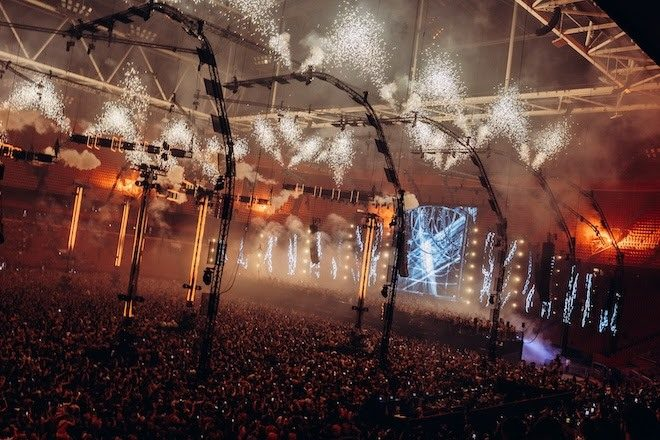
This moment also reflects a broader change in India’s electronic ecosystem. Audiences are no longer just consuming global electronic culture; they’re participating in it with context and intent. The appetite for harder, darker techno signals maturity a willingness to explore discomfort as part of the musical journey.
Sara Landry’s rise globally has been built on that same philosophy. She represents a generation of techno artists who prioritise emotional weight and sonic discipline over accessibility. Her India debut felt less like an introduction and more like a meeting point where artist and audience discovered shared ground in intensity.
What stood out most was the crowd response. There was movement, but not chaos. Energy, but not distraction. The room listened. That kind of engagement is rare, and it speaks volumes about where India’s electronic listeners are headed.
This wasn’t about crossover appeal or market expansion. It was about sound meeting readiness. Sara Landry didn’t soften her approach for India and she didn’t need to. The audience met her where she was.
As electronic music in India continues to diversify, moments like this matter. They show that the scene isn’t just growing it’s deepening. And in that depth, darker sounds are finding a home.
Sara Landry’s debut didn’t announce itself loudly.
It stayed heavy. And it stayed with you.
Read More About: Above & Beyond’s India Tour: Why the Country Remains Central to Their Global Journey

Leave a Comment