Kalpana Patowary’s Folk Ecstasy: When Indian Folk Stops Performing and Starts Breathing
Intro – Defining the Shift
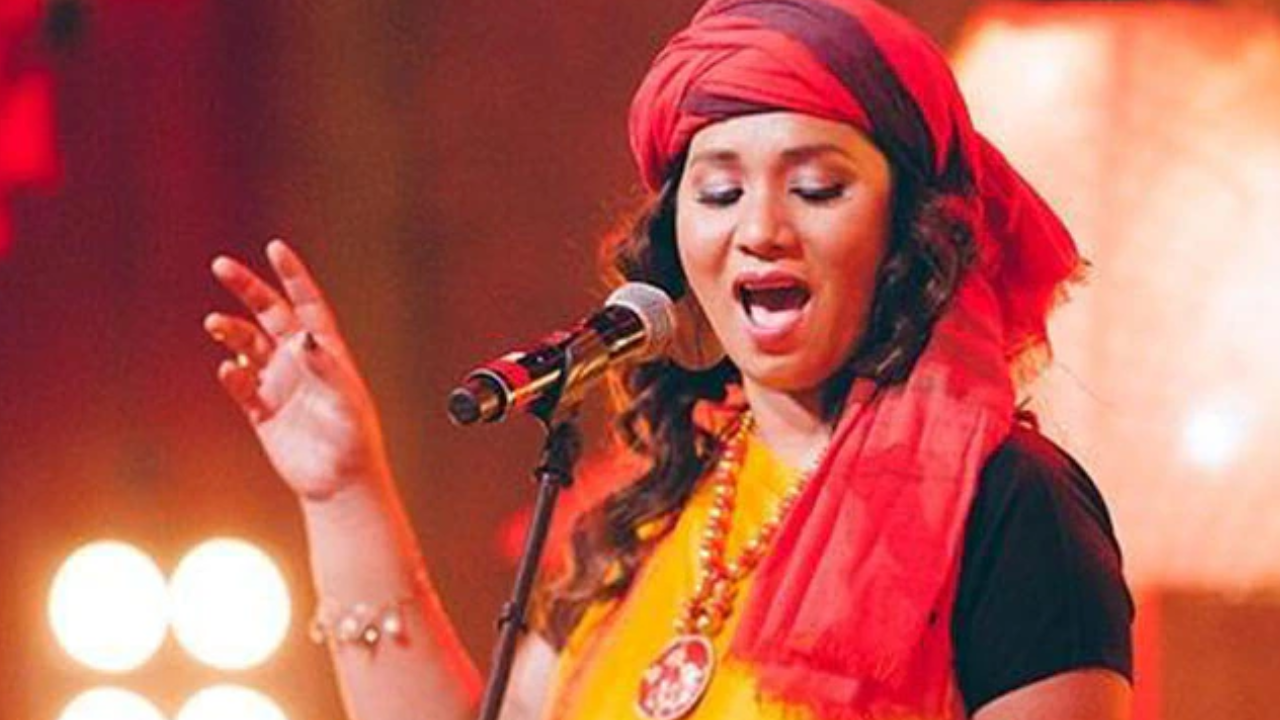
Indian folk music is usually presented as heritage fragmented, explained, and framed as something from the past. With Folk Ecstasy, Kalpana Patowary proposes something radically different: folk not as preservation, but as presence.
Premiering in Mumbai on 24 January 2026 at NMACC, Folk Ecstasy is a 90‑minute, concept‑led live performance that treats Indian folk traditions as living sonic archives continuous, immersive, and emotionally demanding.
This isn’t a concert built around applause breaks. It’s a single narrative arc.
Reality Check – Folk as Museum vs Folk as Truth
The common assumption is that folk music needs translation, explanation, or fusion to survive on modern stages. The ground reality, as Patowary argues, is the opposite.
“Folk Ecstasy comes from the moment when folk music stops behaving solely like heritage and starts behaving like my truth,” she explains. These songs were never written to be paused, analysed, or diluted. They were lived through labour, ritual, grief, and survival.
Folk Ecstasy rejects the stop‑start format of conventional folk showcases. Instead, it asks the audience to slow down and stay present emotion before comprehension.
Artist / Scene Insight – A Voice Built Across Geographies
Kalpana Patowary’s strength lies in her multilingual, field‑rooted practice. Her singing spans seven Indian dialects, moving fluidly across Assamese tribal traditions, Bhojpuri women’s work songs, ritual music, and migration narratives.
These are songs “carried through memory, not notation.” There is no translation dilution. Language remains intact. Meaning travels through sound, breath, and rhythm.
Her curatorial role is central she doesn’t just perform the material, she structures it.
Inside Folk Ecstasy – Sound as a Living Archive
The performance places ethnic folk songs in direct conversation with contemporary jazz structures. This is not fusion for novelty. Source integrity is preserved, while form is reshaped for present‑day listening.
Traditional vocal methods are paired with live contemporary instrumentation. Extended vocal ranges and complex rhythmic cycles ensure archival accuracy, while modern arrangements sustain immediacy.
The result is immersion not spectacle.
As Patowary puts it:
“Expect languages you do not speak, but emotions you recognize. Expect raw voice, controlled arrangements.”
View this post on Instagram
Lineage and Memory – Who the Work Honours
Folk Ecstasy explicitly acknowledges lineage. The work pays tribute to Bhupen Hazarika, a carrier of Assamese cultural memory, and honours Bhikhari Thakur, a foundational architect of Bhojpuri performance ethics.
By naming these figures, the performance situates itself within a continuum folk as inheritance, not inspiration.
Why This Matters – Culture, Form, and Power
Culture:
Folk Ecstasy refuses to relegate folk to the background. It places it at the forefront as a contemporary artistic language capable of complexity and scale.
Form:
The uninterrupted 90‑minute arc challenges how live music is consumed today less scrolling, more surrender.
Ecosystem:
In a time when folk is often sampled or aestheticised, this format insists on responsibility: to memory, to communities, and to accuracy.
Beyond Folk – A Voice You Already Know
While Folk Ecstasy centres her folk practice, Kalpana Patowary is also widely recognised as a playback singer, with songs across mainstream Hindi cinema Gandi Baat (R… Rajkumar), Ore Kaharo (Begum Jaan), Ek Uncha Lamba Kad (Welcome), and Aila Re Aila (Khatta Meetha).
That duality mass visibility and deep field work gives her rare authority in shaping how folk enters contemporary spaces.
What Comes Next – Folk as a Global Language
After Mumbai, Folk Ecstasy will travel to Kolkata, Chennai, Delhi, Bengaluru, Hyderabad, and Chandigarh. Its ambition isn’t expansion for scale, but transmission.
As Patowary signs off:
“In today’s cultural space, Folk Ecstasy places folk music at the forefront. Not as background culture.”
Reader Question – Stay With It
Can Indian audiences relearn how to listen without translation, without interruption?
Would you experience folk differently if you weren’t asked to understand it first?
Read More About: Lil Todu and Sardi Mein Thandaa Paani, Vol. 2: Choosing the Harder Road in Indian Indie Music
One thought on “Kalpana Patowary’s Folk Ecstasy: When Indian Folk Stops Performing and Starts Breathing”
- Pingback: Hansika Pareek Steps Into a New Phase With TM Talent Management


Leave a Comment