The Forgotten Story of How India Changed The Beatles’ Record Business Forever
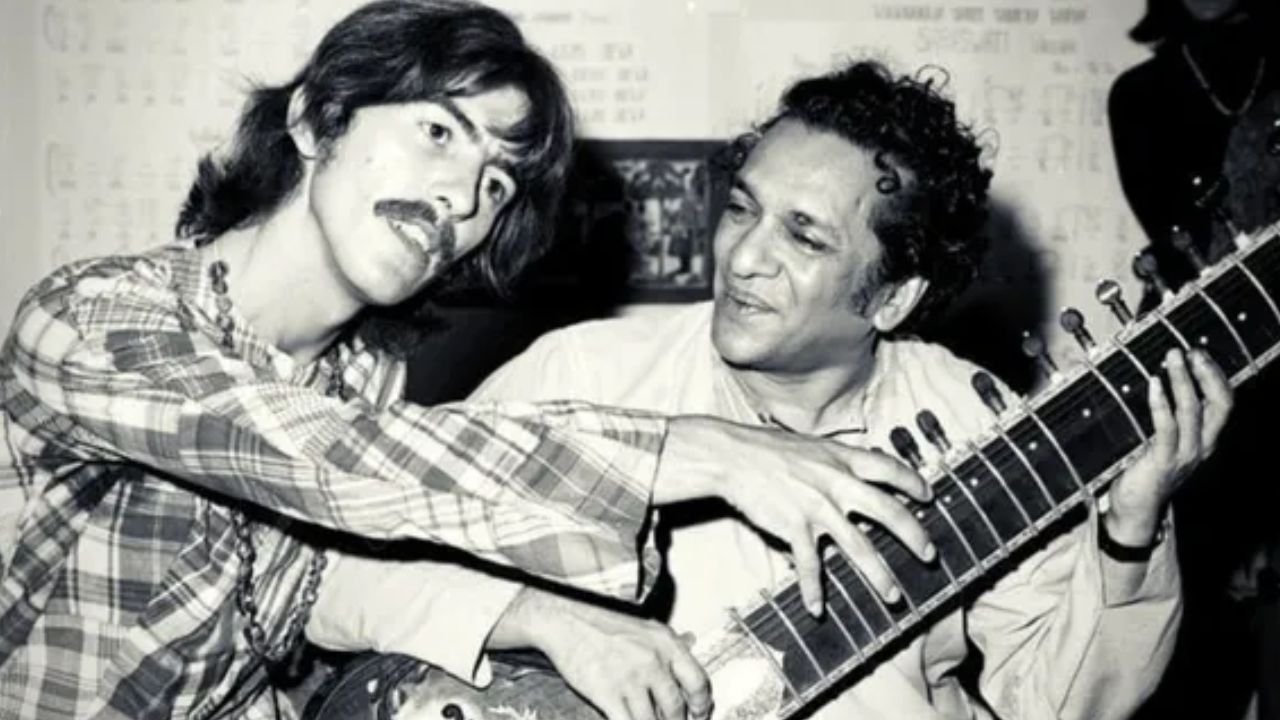
The Shellac Symphony: How India Quietly Reshaped The Beatles’ Global Record Market
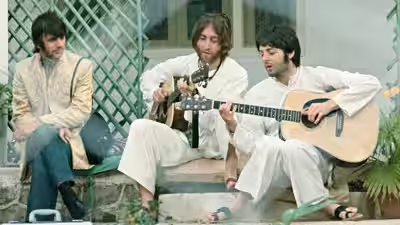
When people think about the relationship between The Beatles and India, one image almost always comes to mind—the band’s spiritual retreat to Rishikesh in 1968, where meditation influenced some of the most celebrated music in rock history.
But years before John Lennon, Paul McCartney, George Harrison, and Ringo Starr arrived in India seeking spiritual enlightenment, the country had already played an unexpected role in shaping their commercial success.
Long before India inspired their music, it transformed the way Beatles records were manufactured, distributed, and collected. At the center of this overlooked story was Kolkata, a city whose record factory helped preserve a dying music format and unintentionally created some of the world’s most valuable Beatles collectibles.
Beatlemania Meets an Unexpected Problem
In 1964, Beatlemania was sweeping across the globe.
To keep up with demand, EMI Records adopted a modern strategy: Beatles singles would be released exclusively on the new 45 RPM vinyl format. Lightweight, durable, and designed for contemporary record players, the format represented the future of recorded music.
Across Europe and North America, the transition seemed obvious.
India, however, presented a completely different reality.
Much of the country still relied on hand-cranked gramophones designed exclusively for 78 RPM shellac records. These machines could not properly play the newer 45 RPM vinyl discs.
For EMI, this created an unexpected dilemma.
Should the company abandon one of the world’s fastest-growing music markets or revive a format it had already declared obsolete?
Bringing Back a “Dead” Format
Only a year earlier, EMI had begun phasing out 78 RPM shellac production in favor of vinyl.
From a business perspective, bringing back shellac manufacturing made little sense.
Yet India’s importance changed the equation.
Recognizing the country’s enormous commercial potential, EMI revived production of 78 RPM Beatles records specifically for the Indian market. The company even relocated record-pressing machinery from the United Kingdom to Canada to support continued shellac manufacturing.
It was an extraordinary decision.
Rather than asking millions of Indian listeners to replace their playback equipment, the world’s biggest record company adapted its products to meet local demand.
The move demonstrated that India was far more than an export destination it had become a market influential enough to shape global manufacturing decisions.
Kolkata: The Unsung Capital of Asian Record Production
Central to this story was EMI’s historic Dum Dum pressing plant in Kolkata.
Operating since 1908, the factory was one of Asia’s most important music manufacturing facilities. It didn’t simply produce records for Indian consumers.
From Kolkata, records were distributed throughout Asia, reaching markets including Hong Kong, Malaysia, and several neighboring countries.
As Beatles records rolled off the presses, the factory became one of the most significant production hubs outside Europe.
In many ways, Kolkata quietly became part of Beatlemania’s global infrastructure.
A Beatles Discography Unlike Any Other
India’s technical requirements created something collectors now consider extraordinary.
Because the records had to suit local playback systems, EMI produced Beatles singles with song pairings that often differed from standard UK releases.
This meant Indian Beatles records developed their own unique discography one distinct from British, American, or European editions.
What was originally a practical manufacturing decision eventually became a collector’s dream.
Today, these releases offer a fascinating glimpse into how regional markets influenced one of the world’s biggest bands.
The Last Beatles Shellac Record
Perhaps the most remarkable chapter in this history also unfolded in Kolkata.
While much of the world had already abandoned shellac records, production for India continued.
Eventually, the final Beatles 78 RPM shellac pressing ever produced was manufactured there.
The record?
“Hey Jude.”
With that release, an entire era of recorded music quietly came to an end.
The last shellac Beatles record wasn’t pressed in London.
It wasn’t made in Liverpool.
It was produced in India.
From Everyday Record to Collector’s Treasure
Time has transformed these pressings into some of the rarest Beatles records in existence.
While standard UK Beatles singles may command respectable prices among collectors, Kolkata’s shellac editions occupy an entirely different league.
A typical UK pressing might sell for around $200.
A rare Kolkata-produced Beatles 78 RPM shellac record can reportedly fetch around $3,000, making it one of the most desirable Beatles collectibles on the international market.
What was once manufactured to solve a regional playback problem has become an artifact of music history.
Why This Story Still Matters
The history of popular music is often written through artists, performances, and landmark albums.
Yet industries are equally shaped by manufacturing, technology, and the audiences who consume them.
India’s influence on The Beatles reminds us that fans can shape the music business just as much as musicians themselves.
Without India’s continued reliance on 78 RPM gramophones, EMI might never have revived shellac production.
Without Kolkata’s record factory, one of the most unusual chapters in Beatles collecting might never have existed.
Long before India inspired Beatles songs, it had already influenced Beatles business.
Final Thoughts
The Beatles’ connection with India extends far beyond spirituality and songwriting.
Years before the band discovered meditation in Rishikesh, India’s music market had already forced one of the world’s biggest record companies to rethink its global strategy.
The shellac records pressed in Kolkata stand as reminders that innovation doesn’t always mean abandoning the past. Sometimes, preserving older technology can create history of its own.
Today, those fragile records are more than collectors’ items.
They are proof that India didn’t simply welcome Beatlemania it helped shape it.
Read More about: Mali Explores Self-Reflection and Emotional Growth with New Single Saviour Complex


Leave a Comment